Smart thermostats designed for Central European climates face a specific challenge in Czech apartments: heating is frequently centrally controlled at the building level, supplied via district heating networks, or delivered through gas boilers shared between floors. This makes Czech thermostat installation a different exercise compared to detached houses in western markets, where most smart thermostat documentation is written.
Understanding the Czech Heating Setup
Three main heating configurations appear in Czech residential buildings:
- Central district heating — heat is delivered from a central plant; individual apartments control flow through thermostatic radiator valves (TRVs). Common in Prague (Pražská teplárenská), Brno, and most large cities.
- Individual gas boiler — the apartment has its own combi boiler (e.g., Buderus, Vaillant, Protherm). Smart thermostats connect here as the control unit, replacing the existing wired thermostat.
- Communal boiler with zone control — a shared boiler heats the whole building; apartments may or may not have individual zone valves.
Identifying which setup applies before purchasing a thermostat prevents expensive returns. The presence of radiator knobs without central heating controls in the apartment is usually the district-heating indicator.
Netatmo Smart Thermostat
The Netatmo Smart Thermostat (Thermostat with Relay) is designed for boiler-controlled systems. It consists of a wall-mounted display unit and a relay box that connects to the boiler's standard dry-contact or OpenTherm terminals. Czech boilers from Junkers, Vaillant, and Protherm are generally compatible.
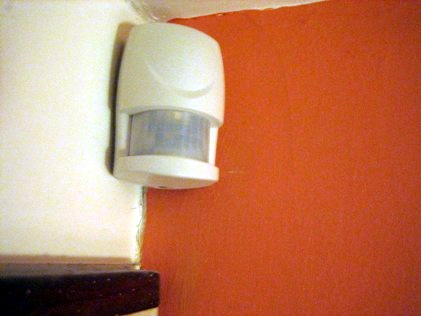
The photograph above shows a Netatmo unit installed in a Michle (Prague 4) apartment — a building with an individual gas combi boiler. Installation in this case required connecting two wires from the relay box to the existing Honeywell thermostat terminals, which took under 30 minutes with basic tools.
Netatmo's scheduling interface is clear, and the app has improved its localisation considerably since 2024. Czech language is supported. The Energy dashboard shows heating hours by day, not gas consumption — useful for tracking but not directly translatable to CZK savings without knowing the boiler's fuel consumption figures.
Retail price: 3 800–4 200 CZK (Alza, Mall). Available with a 24-month warranty under Czech law.
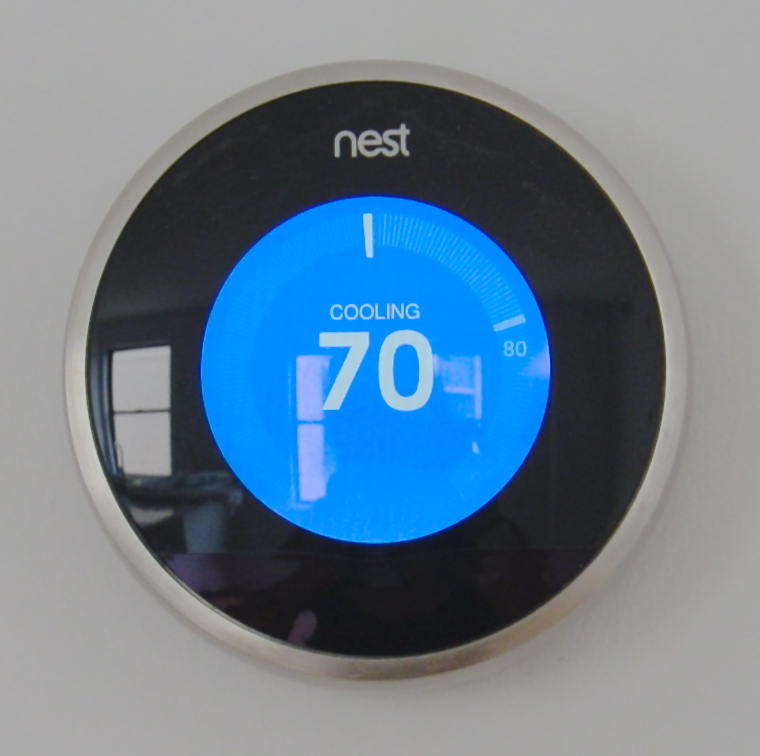
Google Nest Learning Thermostat — the original learning model, now in its fourth generation
Tado Smart Thermostat
Tado is a German company with explicit support for Central European heating systems. Their compatibility checker at tado.com/cz-cs accepts Czech boiler model numbers and provides wiring diagrams specific to the identified device. In testing with a Protherm Gepard 24 MTV boiler, the Tado app returned a correct three-wire diagram and estimated installation time of 20 minutes.
Tado's Smart Radiator Thermostats address the district heating scenario directly. They replace standard TRV heads (M30×1.5 thread, compatible with Heimeier, Danfoss, and Herz valves common in Czech buildings) and can be controlled individually per room. This makes Tado the more complete system for mixed or fully district-heated apartments.
One notable limitation: Tado's auto-assist features (geofencing, open window detection acting on the boiler) require a monthly subscription of approximately 29 CZK/month or 290 CZK/year. Basic scheduling works without it.
Retail price: 3 200–3 600 CZK for the thermostat kit; 900–1 100 CZK per smart radiator valve head.
Google Nest Thermostat
The Google Nest Learning Thermostat (4th generation, 2023) is available through Google's Czech Google Store and through Alza. It uses a 24V AC wiring standard common in North American HVAC — which does not match Czech boiler wiring directly. Compatible installations require a specific set of terminals that Protherm and Vaillant combi boilers in OpenTherm mode can provide, but the Nest compatibility check tool frequently flags Czech boilers as unsupported.
The practical result: Nest works in some Czech installations but requires more research. Users in Czech Home Assistant forums report successful integration with Junkers CERAPUR boilers using a Nest-to-OpenTherm adapter. The learning algorithm requires a few days of manual adjustment before it begins scheduling automatically — in a Czech apartment with irregular heating hours, this adaptation period can extend to two weeks.
Comparison at a Glance
| Device | Czech Boiler Support | Radiator Valves | Local Control | Price (CZK) |
|---|---|---|---|---|
| Netatmo Thermostat | Good | No (separate product) | Partial | 3 800–4 200 |
| Tado Thermostat | Excellent | Yes (per-room) | No (cloud-dependent) | 3 200–3 600 |
| Google Nest | Limited | No | No | 4 500–5 200 |
| Danfoss Eco | N/A (valve only) | Yes (Bluetooth) | Yes (BLE) | 700–900/head |
Energy Savings Context
Czech gas prices (from ČEZ, innogy, or E.ON) have stabilised after the 2022–2023 spike, but remain 40–60% above pre-2022 levels. A 2-bedroom Prague apartment with individual gas heating uses roughly 800–1 400 m³ of gas annually. Reducing heating hours by 15% through scheduling yields savings in the range of 2 000–4 000 CZK per year at 2025 rates — enough to recover a mid-range thermostat cost in 12–18 months.
More detail on Czech energy pricing: Energy Regulatory Office (ERÚ)
Installation Considerations
- Always disconnect boiler power before touching thermostat wiring
- Czech boilers typically use two-wire (dry contact) or OpenTherm four-wire connections
- Rental apartments may require landlord consent before drilling or replacing thermostats
- Smart radiator valve heads are reversible — original valve heads can be reinstalled without any wall modification
- Warranty claims for thermostats go through Czech importers; Tado and Netatmo both have Czech distributor contact points